Table of Content
Most homeowners who used PACE to finance a retrofit did not know about or consider PACE until the contractor brought it to their attention. For this reason, contractors’ needs must be prioritized in any R-PACE program. Striking a balance between protection measures, simplicity, approval process and timing, and ease of use by contractors is key to the success of any R-PACE program. For example, using RenoMarkTM members as a qualified list of contractors is a great and simple way to support consumer protection. Simply put, PACE allows property owners to borrow money to finance measures which serve to advance a “public good” agenda and repay the loan through a surcharge via their property tax bills. Thus, allowing longer term paybacks and addressing upfront capital barriers that often undermine measure implementation.
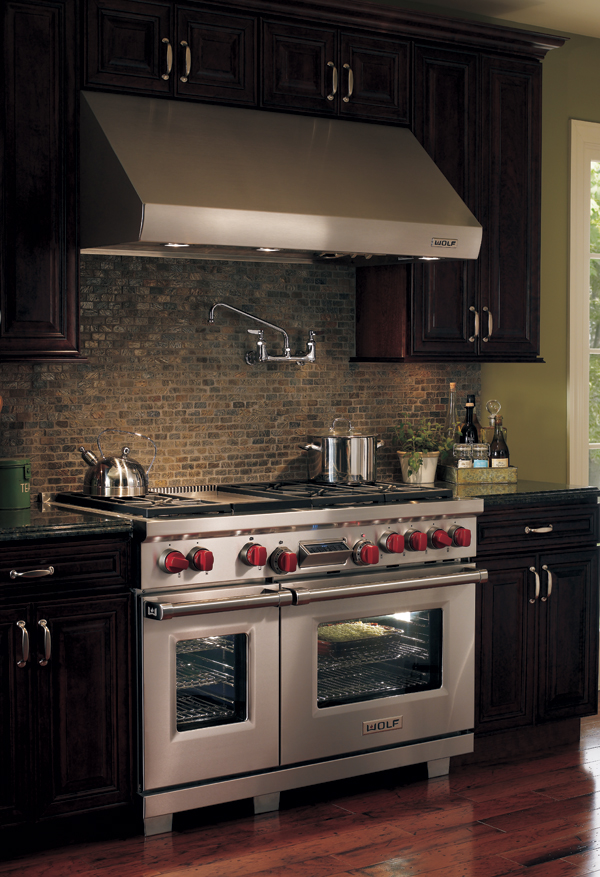
Plus, plant life improves local air quality by consuming carbon dioxide and emitting oxygen into the atmosphere. Whereas it is a bit more difficult to locate energy efficient drills or video game consoles, most of the essential living appliances in today’s homes can be upgraded to a more energy efficient model. If you are striving for net zero, energy efficiency appliances can lower your electricity consumption, and therefore your electric bills and carbon footprint. Beyond net zero energy buildings, homes can install systems for the sustainable use of water, waste, and food. Whereas these are great features, net zero homes generally focus on energy use with the idea of limiting carbon and greenhouse gas emissions. Net zero homes are a new classification of buildings that have become increasingly popular over the past decade.
Sustainable Interior Features
CAD Pro is also used by NHBA home builders and contractors as well as the National Association of Landscape professionals. Cad Pro is an affordable and easy alternative to other more expensive net-zero home design software programs. Cad Pro is great for creating net-zero home plans, custom home plans, building plans, office plans, construction details, and much more. In this beauiful home, you can see net zero details such as a solar hot water collector and carefully sized window overhangs that are typical of passive solar design. Insulation stops the conduction of heat through walls and ceilings, but conventional homes also lose a lot of heat through air leakage.
They generally require careful planning and a substantial upfront investment in order to live both cheaper and more sustainable for the next several decades. For the sake of the earth and your long term financial health however, net zero homes are definitely worth it when trying to reduce energy usage and lower your carbon footprint. Beyond this, purposeful landscape architecture can also dramatically increase a net zero home’s water efficiency, while helping to maintain and improve the area’s ecological health and diversity. Smart sloping water systems along low impact terrains can help grow both native species as well as fruit and vegetable plants. Completely customizable, by utilizing AutoForge technology, BamCore bamboo-based walls are precut to millimeter accuracy for every window, door, switch, and outlet.
For Growing Share of Home Builders, Selling in a Market Correction Means Making Concessions
Generally, the purpose is to maximize solar exposure in winter and minimize it in summer. Consider your home’s east and west facades, as these will influence solar radiation levels. In fact, many new manufactured homes like in the image above, come with all of the materials and systems necessary for maintaining a zero net energy level. With this in mind, prefab homes can be purchased, shipped, and lived in practically anywhere the dealer will deliver. Last but not least, actively monitoring energy usage and staying diligent to low consumption is perhaps the most critical aspect of maintaining a net zero home. That’s right, no matter how well your home is designed, net zero energy use can truly only be obtained as a full lifestyle adaptation.
To ensure that you get the proper insulation for your climate, check out the Department of Energy’s useful guide on R-Values — or the resistance to conductive heat — for the continental U.S. A general rule of thumb is that the colder the climate, the higher the R-Value is needed. Because of the highly specialized nature of solar tempering, homeowners will need to enlist the help of an industry expert who can orient the home and recommend the correct superinsulation and ventilation.
Air tightness
You even have the option to select which eco-projects you’d like to support around the world. If you’re eager to get started, certified B Corp and public benefit company, NativeEnergy, is widely regarded as a leader in carbon credits. What was so revolutionary about Orr’s concept was that homes didn’t need to stop consuming energy entirely, but rather, they needed to do so more efficiently while generating energy to offset that consumption.

By contrast, PACE legislation that is focused on outcomes will encourage local programs that have minimal complexity and overhead costs, where the municipality can play as small a role as its elected representatives prefer. It will also open the door to private sector investment that effectively has no upper limit, especially if the legislation allows PACE loans to be securitized and the proceeds used to recapitalize the program. According to the U.S Department of Energy, 39% of the country's energy consumption is tied to residential and commercial sectors. Solar tempering is less expensive than passive solar techniques and grown in popularity in recent years. Solar tempering enables your house to use the energy of the sun without the extra expenses of thermal mass.
Net Zero and HERS Experts in Design-Build
All of a Net Zero Home’s features work together to significantly minimize your household’s environmental footprint. But the design and engineering principles used in such a home also lead to several advantages. Let's find out some of the benefits that living in a net zero home offers.

Beyond this, retractable awnings and manual or automatic blinds can be installed to further control passive solar heating. Because they are designed to reduce the long term running expenses of a home, net-zero buildings typically require a large upfront cost to build. With global potential, net zero homes can be built practically anywhere in the world, while relying solely on the resources found in and around the property.
These homes are built with an airtight structural shell paired with additional options, such as highly insulated wall systems, high performance windows, passive solar design and more. These net-zero home design features can easily achieve net-zero energy. A net-zero home is a building with net-zero energy consumption, meaning it generates as much energy on-site as it consumes annually.
PACE is an innovative financing tool that is transforming the economics of sustainability, making it both more profitable and more affordable than ever before. Renovating a home to Net Zero can entail significant costs for homeowners, but ultimately it is an investment in lifestyle and should reflect in the potential resale value of the home as well. A directory of energy efficient programs for homes, including retrofits and financial incentives.
By harnessing highly renewable timber bamboo’s strength and integrity, BamCore’s hollow Prime Wall system eliminates most of the thermal bridging found in conventional stud-based framing. It outperforms in thermal resistance by 80% in the warm range and 96% in the cold range. This reduces the environmental impact of heating and cooling our living spaces. With a thermally superior envelope that reduces energy usage and utilizes highly renewable biogenic fiber to reduce embodied carbon. The BamCore Prime Wall is stronger, safer, healthier, quieter, and more cost-efficient than conventionally framed walls. Finally, here’s an example of a home that exceeds the energy efficiency of a net zero home.
That's why we select the most efficient water heating technology and strategies to conserve hot water. We select the most appropriate doors and windows which preserve energy and reduces your utility bills. Our team will select the windows with the best performance and even plan their orientations carefully. After we have created a super-tight building envelope, we move on to design the insulation. Insulating is another cost-effective method which done properly can result in a zero energy home.




No comments:
Post a Comment