Table Of Content
- Tolerance for Errors Guidelines
- Promoting Racial Inclusivity in the Classroom
- Coming soon! UDL Guidelines 3.0
- Low Physical Effort
- Low physical effort
- Xiaoshan Science and Technology City Venture Valley // The
- Stand on the shoulders of giants and follow international standards
- Do I need to be certified in special education to use UDL in my classroom?
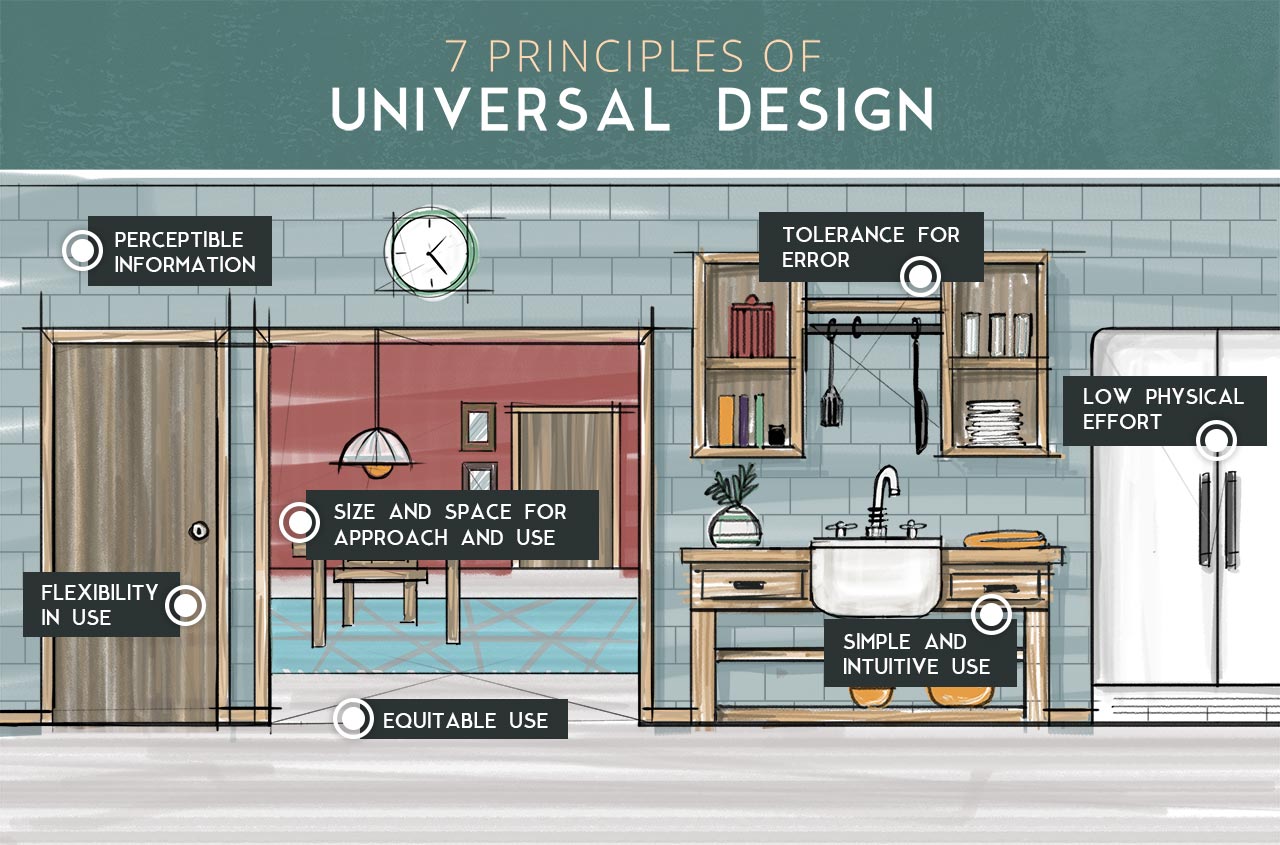
Users can approach Evernote in different contexts, for personal projects or for professional, team-based ones. UX content strategist, architect and consultant Katrin Suetterlin explains the philosophy behind universal design in this video. Inspire lifelong curiosity with this game-based PreK-5 learning experience loved by over 40 million children. SplashLearn is the perfect balance of learning and game-play that your little one needs to build math and reading confidence.
Tolerance for Errors Guidelines
Spark students’ interests and motivations by using exciting and relevant content and providing opportunities to participate in their learning actively. It’s important to integrate relevant disability, accessibility, and universal design content into engineering courses to increase knowledge and skills among future professionals. This will lead to a workforce that is aware of and more capable of addressing accessibility barriers.
Promoting Racial Inclusivity in the Classroom
The principles have since been widely adopted and adapted across various industries and disciplines, from product design to urban planning. Test your design with individuals with different abilities, cultural backgrounds, and perspectives. That way, you can gather valuable feedback and identify potential usability issues. For example, does your design communicate necessary information effectively? (For example, do they not speak English as a first language?) Does your design account for potential hazards and adverse conditions, which some users may find themselves in?
Coming soon! UDL Guidelines 3.0
Whenever you are using the guidelines to plan and evaluate your design, an important thing to note is that sometimes only a few of the seven principles will be relevant to your current design. In the following section, you'll learn about each of the seven principles and its guidelines. Additionally, we will look at design examples for each principle so you can apply these immediately to your projects. Universal design transcends the traditional boundaries of architecture and interior design, encompassing various disciplines, including product design, urban planning, and digital design. By adopting a holistic and human-centered approach, universal design can transform how we live, work, and interact with our surroundings, ultimately contributing to a more inclusive and sustainable world. So, continuously gather feedback, evaluate your design’s effectiveness, and make improvements based on user insights.
Low Physical Effort
Customization is a technique to accommodate a wide range of individual preferences and abilities. It enables users to choose and organize what they see on a website and how they will use it. Many enterprise systems and project management applications have customizable dashboards. Depending on their various work tasks and needs, users can select what they want to see on the dashboard and how they want to use it.
The scope of applications of UD in Higher Education (UDHE) includes all products and environments that directly or indirectly support teaching and learning in higher education. Examples of more narrowly defined scopes are applications of UD to online learning, informal science learning, student services, IT, or physical spaces. When applying accessible design principles, numerous factors must be taken into account. This complexity often contributes to why many designs end up being inaccessible.
Xiaoshan Science and Technology City Venture Valley // The
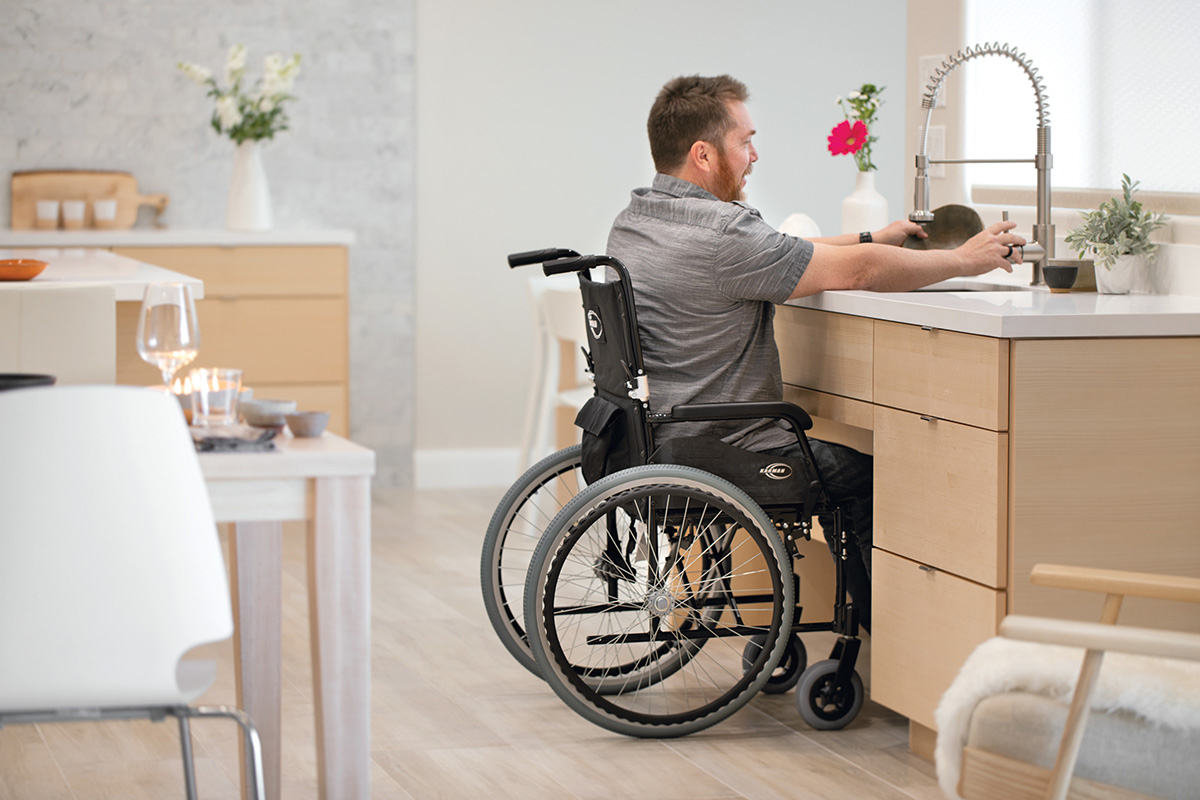
The design can be used efficiently and comfortably and with a minimum of fatigue. The design minimizes hazards and the adverse consequences of accidental or unintended actions. An example of this principle is a desk that is readily usable for a person in a wheelchair. An example of this principle is a video that provides both captions and audio.
Our latest blog delves into how this project can foster inclusivity and community ties, setting a new standard in accessible design. Simply put, universal design ensures something– a building, product, or information, can be accessed, understood and used to the greatest extent possible by all people regardless of their age, size, language, or ability. Universal Design (UD) is the design and composition of an environment so that it can be accessed, understood and used to the greatest extent possible by all people regardless of their age, size, ability or disability. An environment (or any building, product, or service in that environment) should be designed to meet the needs of all people who wish to use it. This is not a special requirement, for the benefit of only a minority of the population. This principle demonstrates the necessity for designs to offer suitable dimensions and spatial allowances, i.e. building restroom stalls that accommodate wheelchairs.
Supporting equitable experiences through universal design - University of Arizona News
Supporting equitable experiences through universal design.
Posted: Mon, 16 Oct 2023 07:00:00 GMT [source]
ADA requirements are intended to serve people with disabilities, while universal design aims to serve everyone. Universal design can create spaces that are also ADA compliant, but it’s a more holistic design approach than simply meeting ADA requirements. Universal design will benefit all Tennesseans especially those who are older or have a disability. While accessible design focuses on the needs of the disabled, universal design is a bit broader. Architect Ron Mace used the term “universal design” for products and environments to be usable by all people, to the greatest extent possible, without the need for adaptation or specialized design. Universal design simplifies life making products, communications, and the built environmental more usable by as many people of all ages and all abilities as possible.
You can avoid segregating or stigmatizing your users by designing color palettes with strong contrast. One of the common myths about accessibility is if you design for accessibility, then you would be sacrificing the visual design. A design with strong color contrast can be aesthetically appealing to all users. In residential settings, universal design can be incorporated through zero-step entrances, wider doorways, accessible bathrooms, adjustable countertops, and open floor plans. Home automation systems can be tailored to individual needs, allowing users to control lighting, temperature, security, and other aspects of their living environment through a single, easy-to-use interface. This can be particularly beneficial for individuals with cognitive or sensory impairments and older adults who may struggle with managing multiple devices.
UDL is a framework that can help teachers create lessons and materials accessible to all students, regardless of their learning styles or abilities. While universal design for learning offers a great vision for accessible education, it’s often critiqued as being too unrealistic. After all, the amount of differentiation required for every single lesson seems almost impossible.
Reviewers ensure all content reflects expert academic consensus and is backed up with reference to academic studies. He is the former editor of the Journal of Learning Development in Higher Education and holds a PhD in Education from ACU. Nevertheless, features like the opportunity to access personalized digital texts and multiple teachers does face a range of barriers – not least of which begin funding pressures. Taking a quick peek into a classroom today in the U.S. and Canada, and one can see students from a wide array of cultural backgrounds. Electronic forms can be completed using a wide range of devices, including assistive technologies.




No comments:
Post a Comment